Defined scope. Defined price. Defined dates.
Before the first line of code, you know what the system will do, when it goes live and what it costs. I plan and build it and put it into operation at your site — and you talk to the same engineer throughout.
Three package sizes, every deliverable visible
A “use case” is one well-bounded workflow — order intake from emails, say, or answer search across your contract archive. Not sure which package fits? That is exactly what the Readiness Check answers.
2–6 weeks to acceptance
- One use case, live in production — not a throwaway prototype
- Agent or knowledge search built on your real data
- A web interface your team starts using immediately
- Runs via cloud API or on your servers
- Documentation and two weeks of post-launch support
6–12 weeks to acceptance
- One complete business process, automated end to end
- Agents operate your systems and coordinate the steps
- Model adaptation to your domain language, or advanced knowledge search
- Automated tests and quality monitoring run alongside
- Four weeks of post-launch support and tuning
12–24 weeks to acceptance
- Several agents working together across processes
- Custom models where standard ones fall short
- Deployment up to fully isolated environments
- Single sign-on, role-based access, compliance review
- Three months of dedicated post-launch support
From check to acceptance — with a payment plan
No advance into the unknown: you pay at milestones, and acceptance follows criteria written into the offer.
“You work with the engineer who writes the code. No account manager, no handover, no junior learning on your project.”Lukas Friedrich · founder of Tippel
What I build
Four building blocks — on their own or combined in one project.
Agents that execute workflows
Software assistants read documents, check them against your data, draft replies and trigger the next step in your existing systems. Sensitive decisions go to a person for approval — every action lands in a log your compliance team can read.
For the IT team
Answers from company knowledge
Your employees ask in plain language and get answers with the exact source — respecting access rights. Answer quality is measured, not asserted: before acceptance you see the hit rate on your real documents.
For the IT team
Models that speak your language
Where standard models don’t know your terminology, forms or norms, I adapt models to your documents — and demonstrate the improvement against the agreed criteria before delivery.
For the IT team
Image and sensor data
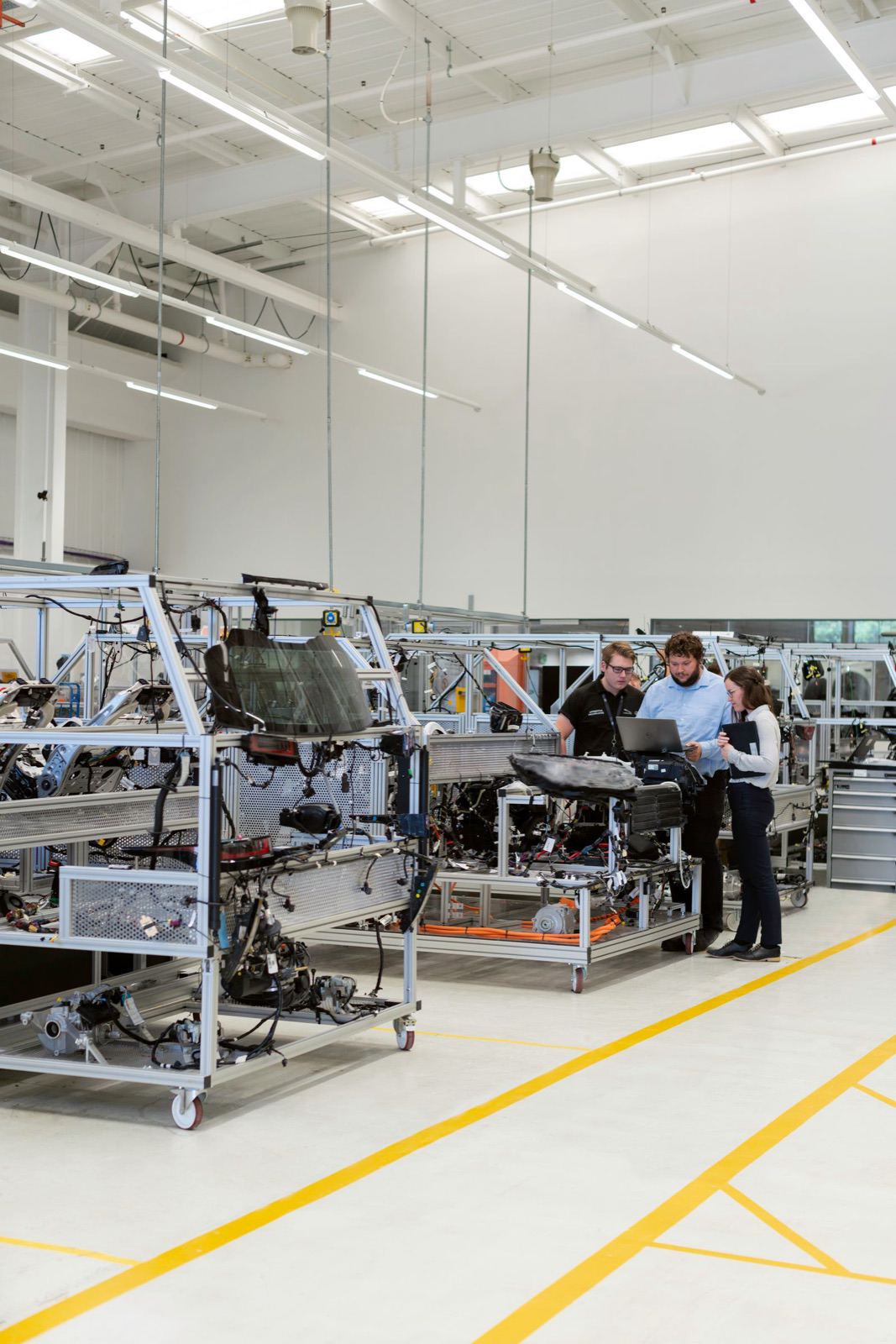
For manufacturing and engineering, I train models on your image, 3D and measurement data — for in-line quality inspection, for example. Results reach production in seconds.
For the IT team
Three paths — chosen by requirements, not ideology
I set up all three paths GDPR-clean, with data processing agreements and documented data flows. The difference lies in time to start, cost profile and control:
| Cloud API | EU cloud, self-hosted | Your own servers | |
|---|---|---|---|
| Models | OpenAI, Anthropic or Microsoft Azure | Open models in a German/EU data centre | Open models on your hardware — up to fully air-gapped environments |
| Time to start | Days | Weeks | Weeks, plus hardware procurement |
| Cost profile | Usage-based, no own hardware | Monthly server costs, predictable | One-off hardware, low running costs |
| Your documents | Stay in your systems; only the individual request goes to the provider, encrypted (DPA, EU endpoints, no training on your data) | Stay entirely in the EU data centre | Never leave the building |
| Typical choice for | Fast start, variable load, standard confidentiality requirements | US providers ruled out, predictable costs | Trade secrets, classified material, regulated environments |
The paths can be mixed: sensitive documents stay in-house while uncritical load runs through the cloud. Which variant fits your case is settled by the Readiness Check — including an operating-cost estimate, not just a build price. Contracts and data flows in detail: Procurement & IT.
Optional maintenance: so the system still delivers in month twelve
Commissioning is part of every package. Ongoing operations stay with you — or we put together a maintenance package:
Monitoring & quality
In the maintenance package, answer quality is measured continuously. If the system drifts, I see it before your users do — and fix it.
Updates & evolution
Model and security updates, regression tests after every change, and a monthly engineering allowance for new requirements.
Maintenance package from €1,500/month
Response times and availability are set in the retainer contract — plus a quarterly review with the system’s quality metrics. No retainer, no problem: you receive the system fully documented and take over yourself.
Describe your project — get a real price
A short project description is enough. Within 48 hours I reply with a fixed-price offer, or with the two or three questions still needed for one.